Submitting to UK Literary Agents: A Seasonal Timeline for Debut Novelists
A month-by-month guide to when UK literary agents are busiest, how long replies take, and how to plan your...


The clocks go back, the light drains out of the afternoon by four, and the evening opens up in front of you like a blank page. Most writers treat this as the hard season. It isn't. Winter hands you the one thing plotting needs: long, quiet, slightly inward hours. A four-week plotting retreat doesn't require a converted barn in the Peak District. It requires a kitchen table, a lamp, something hot in a mug, and a decision to spend your evenings on the shape of a story rather than the prose of it.
Short sessions, five or six nights a week, thirty to forty minutes at a time. By the end you'll have a plot you can draft from rather than a vague sense of a book you might write one day.
You need less than you think, and everything should fit in one shoebox so that setting up takes ten seconds rather than ten minutes.
If you rent and can't put holes in the wall, low-tack tape and a door work perfectly well. The point of the wall is that your plot becomes something you walk past, not something you have to remember.
Don't plot yet. Empty your head instead. Each evening, spend twenty minutes writing down everything you already know: fragments, images, a line of dialogue, the argument that starts the book, the ending you can see from here. Include the scenes you're avoiding. The ones you don't want to write usually contain the plot.
Sort the results into three piles: things that happen, things that are true about people, and questions you can't answer yet.
On two evenings, read a novel in your genre for structure only. Note the chapter lengths and where the first big turn lands — check your own shelf rather than trusting a formula. At the end of the week, write one paragraph in the present tense describing the story as though telling a friend in a pub. One paragraph. That's your compass.
Now you're allowed to plot. Take index cards and write one scene per card, a scene being something that changes the situation. Aim for eight to twelve cards, not thirty. Fewer, bigger moments are easier to hold in your head.
The first door is where the story properly starts, when the protagonist can no longer carry on as they were. The second is the point of no return, the choice after which going back is worse than going on. Write both on separate cards and pin them up. If you can't find the second door, the middle will drift, because nothing is holding it shut.
Not the final sentence — the final situation. Who is where, and what has it cost them? Ending first isn't a rule, but it's a good winter habit: knowing the destination means even a tired evening's work moves you closer.
Lay the cards in a line along the floor, a corridor you can walk down. For each card ask: does this cause the next one? If the answer is "and then", you have a sequence rather than a plot. Rewrite the join until it says "because" or "therefore".
A plot is not a list of events. It is a ledger of what each event costs.
Walk the corridor one card at a time and answer three questions in the margin. What does this cost the protagonist? Who is pushing back? What does the reader learn that they didn't know before? A card that answers "nothing" to all three is furniture. Cut it or make it earn its place.
Then try the alternatives test. For each tent pole, jot down two things that would be worse for your protagonist and one that would be more interesting than what you've planned. You won't use most of them. Occasionally one will make you put the pen down and stare at the wall, which is the feeling you're after.
Subplots: two at most. Each should touch the main plot at least twice, and one should resolve before the climax so the ending doesn't carry four loads at once. Give each its own colour of sticky note and see how the wall looks.
Read the whole plan aloud in one sitting and record it on your phone. Listen back on a walk the next day — walking is when weak joins become obvious. Don't fix anything while you read; just flag.
Keep that page at the front of the notebook. It's your map for January.
Winter evenings are long, but energy isn't, so protect the routine rather than the word count.
One note on the season itself: if the short days leave you flat and unable to work for weeks rather than days, mention it to your GP rather than pushing through. Plotting is a craft, not a cure.
A one-page plan, a wall of cards you can see in your sleep, and five scenes you're genuinely excited to write. That's a better starting point than most drafts get.
Resist a fifth week of plotting. Scaffolding is not the building, and a plan polished for too long becomes a substitute for writing. Draft the first scene while the ending is still fresh, and let the plan bend where the prose pushes back. The retreat has done its job; now the book gets to argue with it.
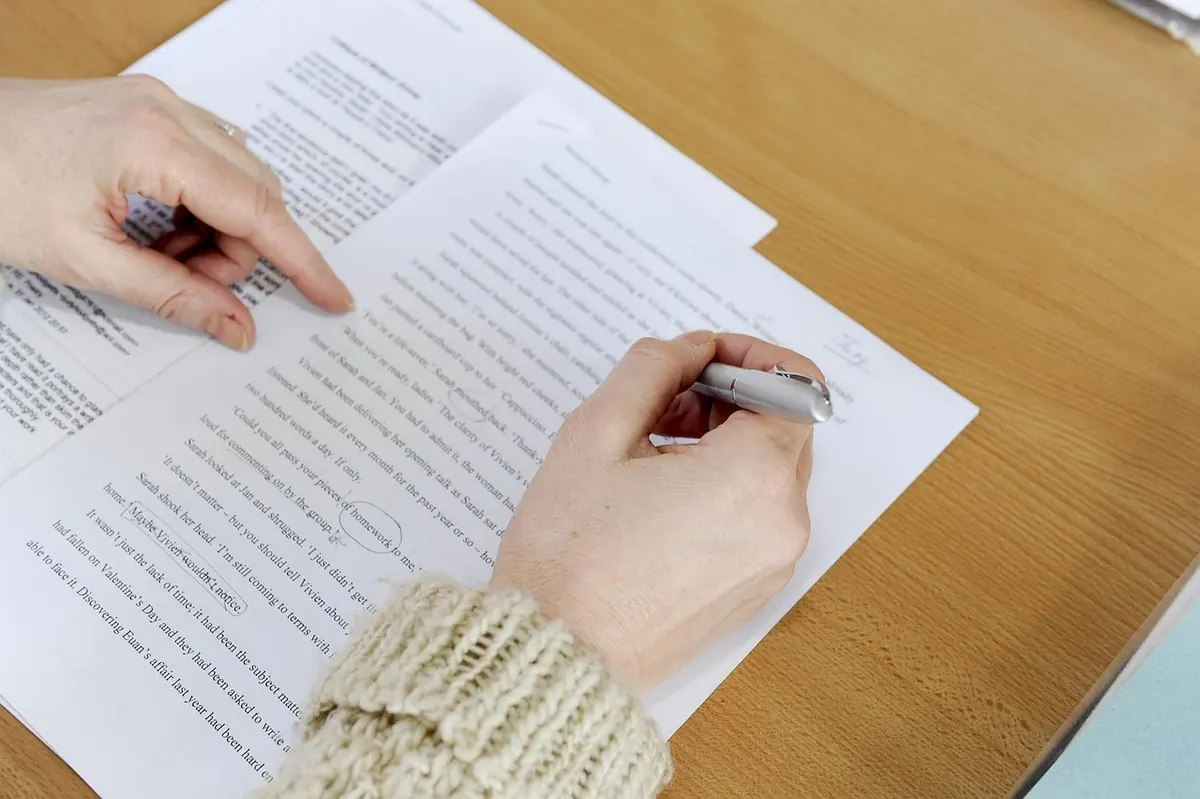
Photo: smartmomblogger / Pixabay
A month-by-month guide to when UK literary agents are busiest, how long replies take, and how to plan your...
A practical UK-focused comparison of traditional and self-publishing, covering costs, timelines, rights...
A practical British English copyediting checklist for fiction: UK spelling, punctuation, dialogue...