Submitting to UK Literary Agents: A Seasonal Timeline for Debut Novelists
A month-by-month guide to when UK literary agents are busiest, how long replies take, and how to plan your...


Two writers finish a manuscript on the same Tuesday. One spends the next two years refreshing an inbox, waiting on agents. The other uploads a cover and has a book on sale by the weekend. Both are published, and neither route is a mistake — but they ask for very different things, and they pay out in very different ways. Here's how the two compare when you're standing at the start line.
Traditional publishing means an agent takes you on, sells your book to a publishing house, and that house pays you an advance against royalties. In return, it handles editing, design, printing, distribution and at least some marketing. Your job is to write the next book and show up for the edits.
Self-publishing means you are the publisher. You commission the editing and the cover, format the book, choose where it sells, set the price and carry the cost. You keep a far bigger slice of each sale, but you also do the admin that a publisher would otherwise absorb.
There's a third, muddier option: small independent presses that sit between the two, and so-called hybrid or contributory publishers that ask you to pay. Some small presses are genuinely good. As a rule, though, money should flow towards the author. If a "publisher" wants several thousand pounds up front and leaves you with the rights, read the contract twice.
Advances vary wildly. A debut novelist might get a modest sum; a celebrity memoir might get a headline figure. The advance is paid in instalments — commonly on signing, on delivery of an acceptable manuscript, and on publication — and it is an advance against royalties, not a gift. It has to earn out before you see anything further.
Royalties are usually calculated on the publisher's receipts rather than the cover price, and they're often surprisingly low: commonly somewhere in the region of 7.5 to 10 per cent on print, and around 25 per cent on ebooks. Your agent takes a commission, typically 15 per cent on UK deals and 20 per cent on some translation and subsidiary rights.
There's no advance. You spend first and earn later, and the biggest line in your budget will almost always be editing. Expect to pay for:
In return, the main retail platforms tend to pay around 70 per cent on ebooks priced inside a set band, dropping to roughly 35 per cent outside it. Print royalties are lower because printing is deducted. Sell a few thousand copies and you may well out-earn a friend on a traditional deal — but you'll have done the work of an entire publishing department to get there.
If publishing income starts to look like a business, or before you sign anything lengthy, take proper advice from an accountant or a solicitor who knows publishing. Membership of the Society of Authors includes contract vetting, and it's one of the best-value things a UK writer can buy.
Traditional publishing runs on other people's diaries. Querying takes anywhere from a few weeks to a couple of years. An agent then submits to editors, which can take months more. Once a deal is signed, publication is usually 12 to 24 months away. Two to four years from finished manuscript to bookshop shelf is a realistic expectation, and many good books never get that far.
Self-publishing is as fast or as slow as you make it. Uploading takes minutes; the files go live in a day or two. The bottleneck is quality. Allow one to three months for editing, plus design and proofing, and most authors are wise to give themselves three to six months between "the end" and launch day.
Traditional publishers usually acquire broad rights — often world rights, for the life of copyright, which lasts your lifetime plus seventy years. They decide the cover, sometimes the title, the price and the publication date. In exchange you get advances, distribution, and a genuine shot at bookshop shelves, review coverage and prizes.
Self-publish and you keep every right: print, ebook, audio, translation, film. That also means nobody else is out there selling them for you. You can license them later, and plenty of authors do. Just be aware that some doors — chain bookshop stocking, most newspaper review pages, many literary prizes — open far more easily for traditionally published titles.
Traditional suits writers who want the industry to handle production, who can tolerate long waits and sharing control, and who are chasing shelf space and critical attention. Self-publishing suits writers with a niche audience, a fast output, a marketing instinct and some money to invest. Plenty of people do both: self-published success is now a common route to a traditional deal, and traditionally published authors often reissue their backlist themselves.
Pick one route and give it a focused six weeks. Going traditional? Research ten to fifteen recent books like yours, note who represents those authors using a current edition of the Writers' & Artists' Yearbook, then write your query letter and a one-page synopsis and send in small batches. Going independent? Book a structural edit, sort your ISBN early, and set a launch date you can work backwards from.
Either way, keep writing. The book you haven't written yet is the best marketing your last one will ever get.
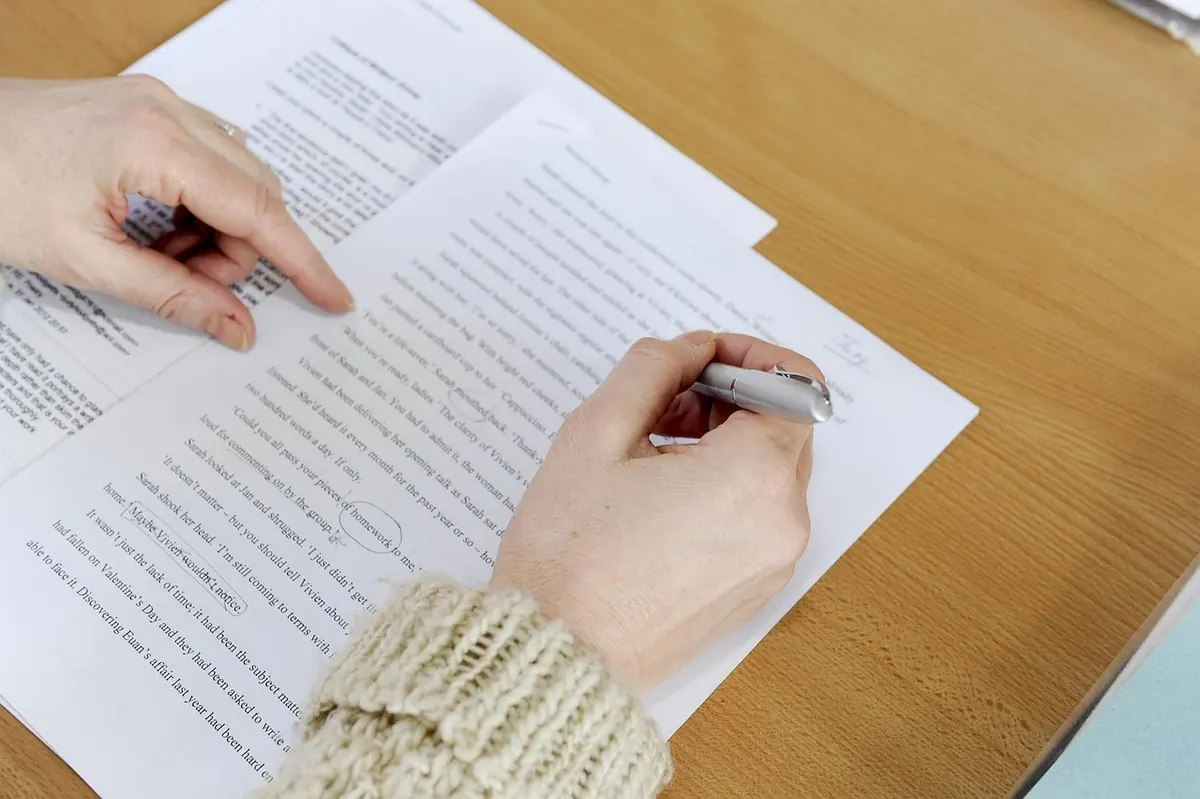
Photo: svecaleksandr249 / Pixabay
A month-by-month guide to when UK literary agents are busiest, how long replies take, and how to plan your...
A practical British English copyediting checklist for fiction: UK spelling, punctuation, dialogue...
Self-editing a novel is easier when you stop trying to fix everything at once. This five-pass method moves...