
Submitting to UK Literary Agents: A Seasonal Timeline for Debut Novelists
A month-by-month guide to when UK literary agents are busiest, how long replies take, and how to plan your...

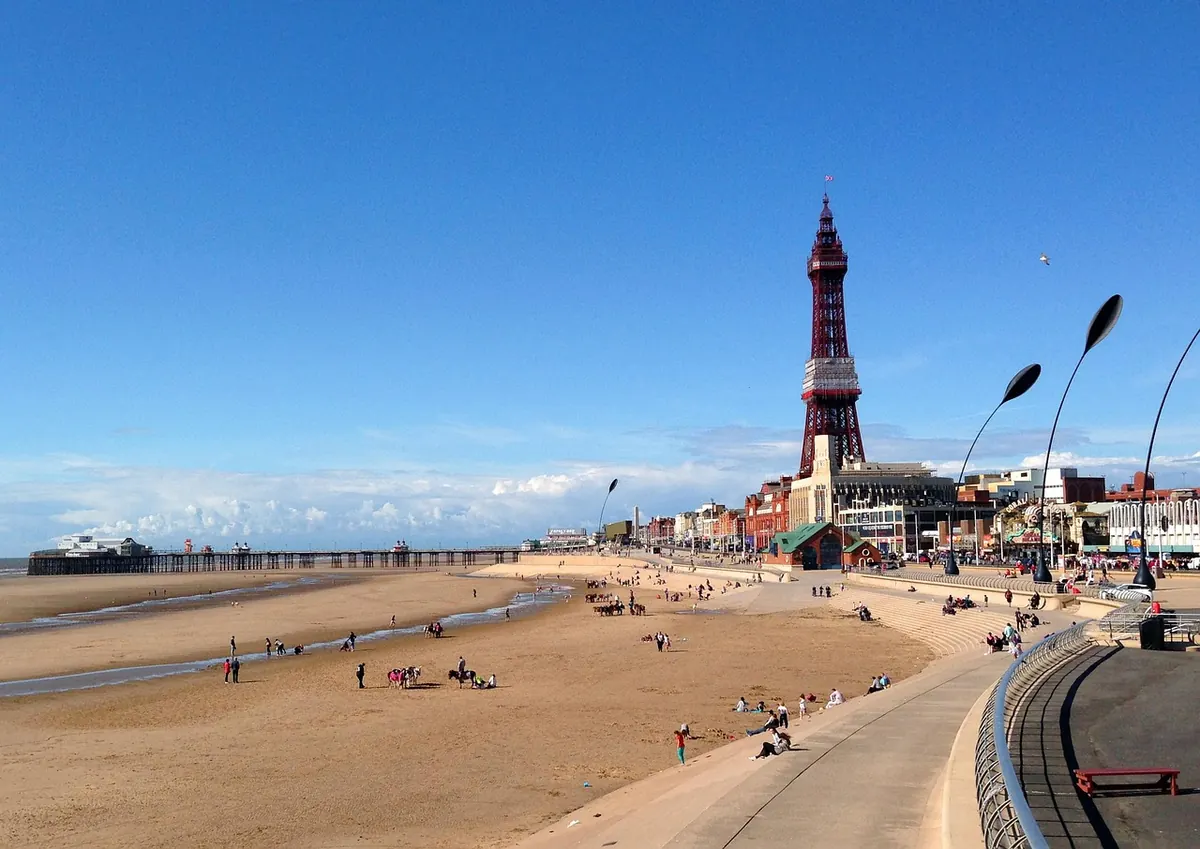
A British seaside town is never one place. It is at least two: the August version, with the queue snaking out of the chip shop and the car park full by half nine; and the February version, where the wind comes off the sea, rattles the shutters, and the only people on the promenade are a dog walker and someone up a ladder fixing a gutter. Both are true. Writing the coast well means deciding which one your story needs — and then getting the small, stubborn details right.
Seaside settings are generous to fiction. They are places people go to escape, start again, disappear, or grow old. Holidaymakers and residents share the same few streets, and the friction between them does a lot of narrative work for free. Here is how to research and evoke those towns without producing a postcard.
Inland, time is measured by work and transport. On the coast, it is measured by water. Successive high tides arrive roughly every twelve and a half hours, so the beach your character walks on at breakfast is underwater by teatime. Tidal range varies enormously: a few metres in some places, many more in the Bristol Channel. That single fact shapes everything — when the ferry runs, when the boats go out, where the mud is, which causeway you must not cross at four o'clock.
Then there is season. A coastal town's population can swell dramatically between Easter and October, then collapse. Businesses open and shut like valves. Landladies, arcade staff, ice-cream sellers and deckchair attendants work hard for six months and sign on for the rest. Characters who live there year-round know exactly what the place looks like empty, and that knowledge marks them out.
Weather matters too, but be specific. The east coast gets sea fret — a cold, dense fog that rolls in off a warm-weather sea and swallows the pier. The west takes Atlantic weather head-on. Wind direction changes what your character can smell from the harbour.
Pick one town and commit to it. Blackpool, Whitby, Rhyl, Great Yarmouth, Margate, Cleethorpes and Morecambe are not interchangeable, and readers who know them will notice if you muddle them. A named, particular town gives you geography for free: the shape of the bay, the direction of the prevailing wind, the position of the station, the bus routes, the estate on the hill.
Useful sources, in roughly this order of value:
If you can visit, go out of season. That is when the place shows you its bones.
Atmosphere is built from specifics, and the coast is unusually rich in them because it engages every sense at once. Keep a running list for your chosen town and draw from it sparingly.
One or two of these per scene is plenty. A page of them reads like a brochure.
Dialect is the fastest way to make a coastal setting feel lived in, and the fastest way to make it feel fake. The rule is restraint: pick three or four markers and use them consistently, and let grammar and rhythm carry the accent rather than a blizzard of apostrophes. Dropping every final g makes prose hard to read and can read as mockery.
'You're not stopping for a brew?' she said. 'You've come all this way.'
That does more than an eye-dialect paragraph, because the phrasing — the assumption of hospitality, the mild reproach — is doing the work. Look for regional words that name local things: a ginnel, a jitty or a twitten for an alley; a static, a chalet, a beach hut, a bait box. Terms for visitors divide along the same lines: grockles and emmets in the West Country, incomers in the Highlands, second-homers everywhere. Use them with care; they are in-group words, and your point-of-view character needs a reason to have them.
Get the working life right, too. Coastal economies run on hospitality, care, fishing, offshore work, the ferry, the retail park on the bypass, agency staff in a residential home on the edge of town. A character who works nights at a holiday park has a different week from one who runs a gift shop that closes in November.
First, the shorthand of decay. A boarded-up arcade does not automatically mean despair, and a gleaming restored pier does not automatically mean gentrification has solved anything — often the opposite. Second, the wise old fisherman who speaks only in aphorisms. Third, the assumption that coastal towns are quaint, quiet or cut off. Most have decent broadband, a Tesco Express and a bus that runs until eleven, because that is how people actually live.
Do that, and the setting stops being a backdrop and starts behaving like a place — with its own clock, its own smells and its own opinions about who belongs there.
Photo: SnapHappyUK / Pixabay
A month-by-month guide to when UK literary agents are busiest, how long replies take, and how to plan your...
A practical UK-focused comparison of traditional and self-publishing, covering costs, timelines, rights...
A practical British English copyediting checklist for fiction: UK spelling, punctuation, dialogue...